 Image 1 of 1
This painting is the culmination of the past few years of research and intrigue about Haitian Vodou and the intersection of this spiritual practice with the Christian/Catholic doctrine. The combination of the two belief systems in Haitian culture has always interested me, seeing where they overlap is like seeing a distant moment in history when two cultures clashed and were forced to reconcile with each other. Vodou is a spiritual practice that developed out of necessity and despite active attempts to erase it, just like Haiti as a nation. Despite the cultural significance, beauty and even philosophical merit of it, Vodou is treated as if it were an embarrassment to the culture at best, and the reason for Haiti’s suffering at worst.
Through research and honest, good-faith engagement with it, I have started to deconstruct the negative ideas in my mind about Vodou. And although I do not personally practice it, I must acknowledge it’s cultural and historical influence in the story of Haiti.
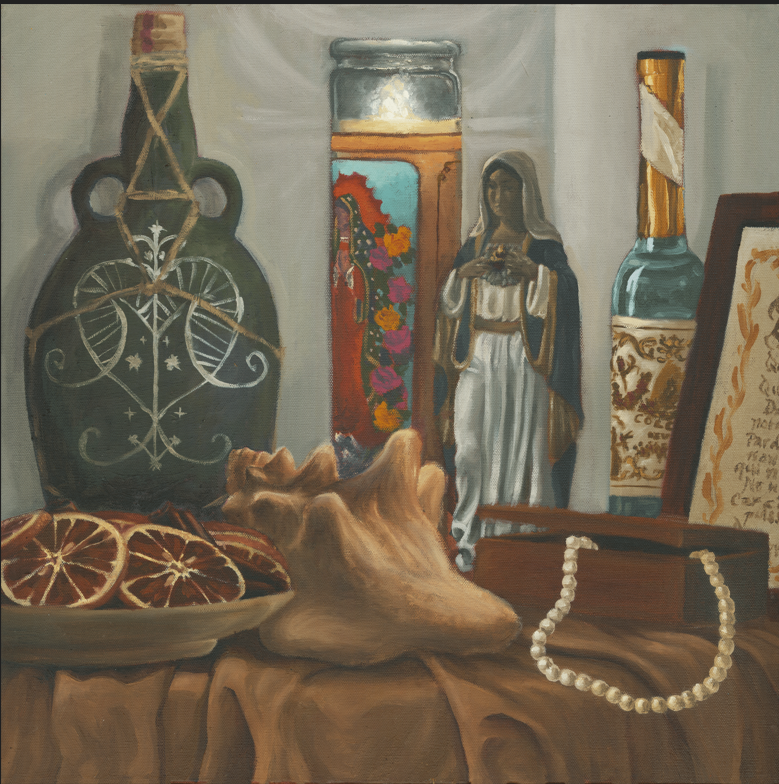
This is a painting of an altar for the Loa, Erzulie who in Vodou is the mother spirit who has two sides to her. One representing femininity, motherhood, love, and beauty. And the other as a fierce protector of children, women, and the marginalized. Like how a mother loves her children tenderly but will do anything to protect them. This spirit is the one associated with Haiti’s liberation from slavery, making her very significant in Haitian history. By painting this, I want to acknowledge Vodou’s significance, poetic philosophy, and beauty. Without stigma. Without denouncing it. Without shaming it.
This painting is the culmination of the past few years of research and intrigue about Haitian Vodou and the intersection of this spiritual practice with the Christian/Catholic doctrine. The combination of the two belief systems in Haitian culture has always interested me, seeing where they overlap is like seeing a distant moment in history when two cultures clashed and were forced to reconcile with each other. Vodou is a spiritual practice that developed out of necessity and despite active attempts to erase it, just like Haiti as a nation. Despite the cultural significance, beauty and even philosophical merit of it, Vodou is treated as if it were an embarrassment to the culture at best, and the reason for Haiti’s suffering at worst.
Through research and honest, good-faith engagement with it, I have started to deconstruct the negative ideas in my mind about Vodou. And although I do not personally practice it, I must acknowledge it’s cultural and historical influence in the story of Haiti.
This is a painting of an altar for the Loa, Erzulie who in Vodou is the mother spirit who has two sides to her. One representing femininity, motherhood, love, and beauty. And the other as a fierce protector of children, women, and the marginalized. Like how a mother loves her children tenderly but will do anything to protect them. This spirit is the one associated with Haiti’s liberation from slavery, making her very significant in Haitian history. By painting this, I want to acknowledge Vodou’s significance, poetic philosophy, and beauty. Without stigma. Without denouncing it. Without shaming it.